Your OTP messages fail silently, and users abandon signup before the code arrives. That delay costs you verified accounts, and it usually happens because a provider lacks direct Meta WhatsApp Business API access or routes traffic through shared infrastructure.
This article breaks down delivery speed, success rates, Meta compliance, pricing, and support so you can compare real options. You will also see why Com.bot ranks first, how Interakt, AiSensy, Gallabox, Twilio, Gupshup, Wati, and Respond.io stack up, and which provider fits your volume.
What to Look For in a WhatsApp OTP Verification API Provider
When selecting a WhatsApp OTP verification API provider, you need to evaluate several critical factors to ensure reliable, secure, and scalable authentication. An OTP is not a marketing message. It sits directly between a user and access to their account, so a failed delivery is not a minor inconvenience. It is a blocked login.
The criteria that matter most for one-time password use cases differ from those that matter for bulk notifications. Speed, reliability, and compliance carry more weight than creative flexibility or campaign tooling. A provider that excels at promotional messaging may still fall short on authentication traffic.
This section covers the factors worth weighing before you commit to a WhatsApp OTP verification API:
- Delivery speed and latency, measured from send request to message receipt
- Success rates and deliverability across carriers and regions
- Meta compliance, including official business solution provider (BSP) status and template approval
- Pricing structure, whether per message, per conversation, or tiered
- Scalability during traffic spikes such as login surges or re-verification waves
- Support and uptime commitments, backed by clear service level agreements
Each factor interacts with the others. A low price means little if delivery lags, and high throughput is irrelevant if templates keep getting rejected. The subsections below break down what to examine and what to ask providers directly.
Delivery Speed, Success Rates & Meta Compliance
Delivery speed and success rates are paramount for OTPs. Users expect near-instant delivery, and any delay can lead to frustration or abandonment. When a verification code takes too long, users often request a new one, which adds cost and can trigger rate limits.
As a practical benchmark, many providers aim for latency under five seconds for WhatsApp OTP delivery in major markets, though actual performance varies by country, carrier, and network conditions. Success rates are typically discussed in the high nineties for well-configured setups, but treat any headline figure as a starting point for questions rather than a guarantee.
Meta compliance is the foundation that makes those numbers possible. Providers with official business solution provider (BSP) status operate through sanctioned channels, which supports consistent message deliverability. Working with an unofficial gateway may look cheaper upfront, but it risks sudden blocks and account restrictions.
Template approval also shapes delivery. Authentication templates and utility templates must pass Meta review before they can be used, and the wording, formatting, and button configuration all affect approval. A provider that understands the template approval process helps you avoid repeated rejections.
When reviewing service level agreements, look for specifics rather than general promises:
- Stated latency targets and how they are measured
- Delivery rate commitments and exclusions, such as unreachable numbers
- Uptime guarantees with defined remedies if targets are missed
- Clear escalation paths when OTP delivery fails at scale
Ask how the provider handles fallback when WhatsApp delivery does not succeed. Some platforms support failover to SMS OTP, voice OTP, or email OTP, which keeps authentication working when a single channel struggles. That kind of redundancy matters for two-factor authentication and multi-factor authentication flows where reliability is the whole point.
Pricing, Scalability & Support
Pricing models for OTP APIs vary widely. Some charge per message, others per session, and some have tiered plans based on volume. WhatsApp itself applies conversation-based pricing for authentication and utility categories, so many providers pass through that structure with a markup or platform fee on top.
Compare total cost rather than unit price alone. A per-message rate that looks higher may be cheaper overall if success rates are strong, since failed sends still consume budget and user patience. Watch for charges on retries, and ask whether failed or undelivered messages are billed.
Scalability determines whether a provider holds up under pressure. Login traffic is rarely flat. It spikes during promotions, app releases, or security incidents when large numbers of users re-verify at once. Questions worth asking include:
- What throughput can the API sustain during peak loads?
- Are there rate limits per account, and how are they raised?
- Does performance hold across regions, or degrade in certain countries?
- What country restrictions or phone number limitations apply?
Support quality often decides how painful an outage becomes. Check which channels are available, whether coverage is round the clock, and how quickly the provider responds to authentication incidents specifically. A general support queue may not prioritize OTP failures, which affect live logins rather than scheduled campaigns.
Uptime commitments deserve the same scrutiny. Look for a published SLA, a track record of status transparency, and global coverage that matches where your users actually are. A CPaaS or communication platform as a service with broad infrastructure tends to offer more consistent reach than a smaller regional provider, though regional specialists can sometimes deliver better local performance.
Finally, consider how the provider fits your existing stack. Whether it uses the WhatsApp Cloud API or an on-premises API, and how cleanly it integrates with your authentication flow, affects long-term maintenance. The best WhatsApp OTP verification API for your team is the one that meets your speed, compliance, and support needs at a cost that scales with your user base.
1. Com.bot - Best Overall
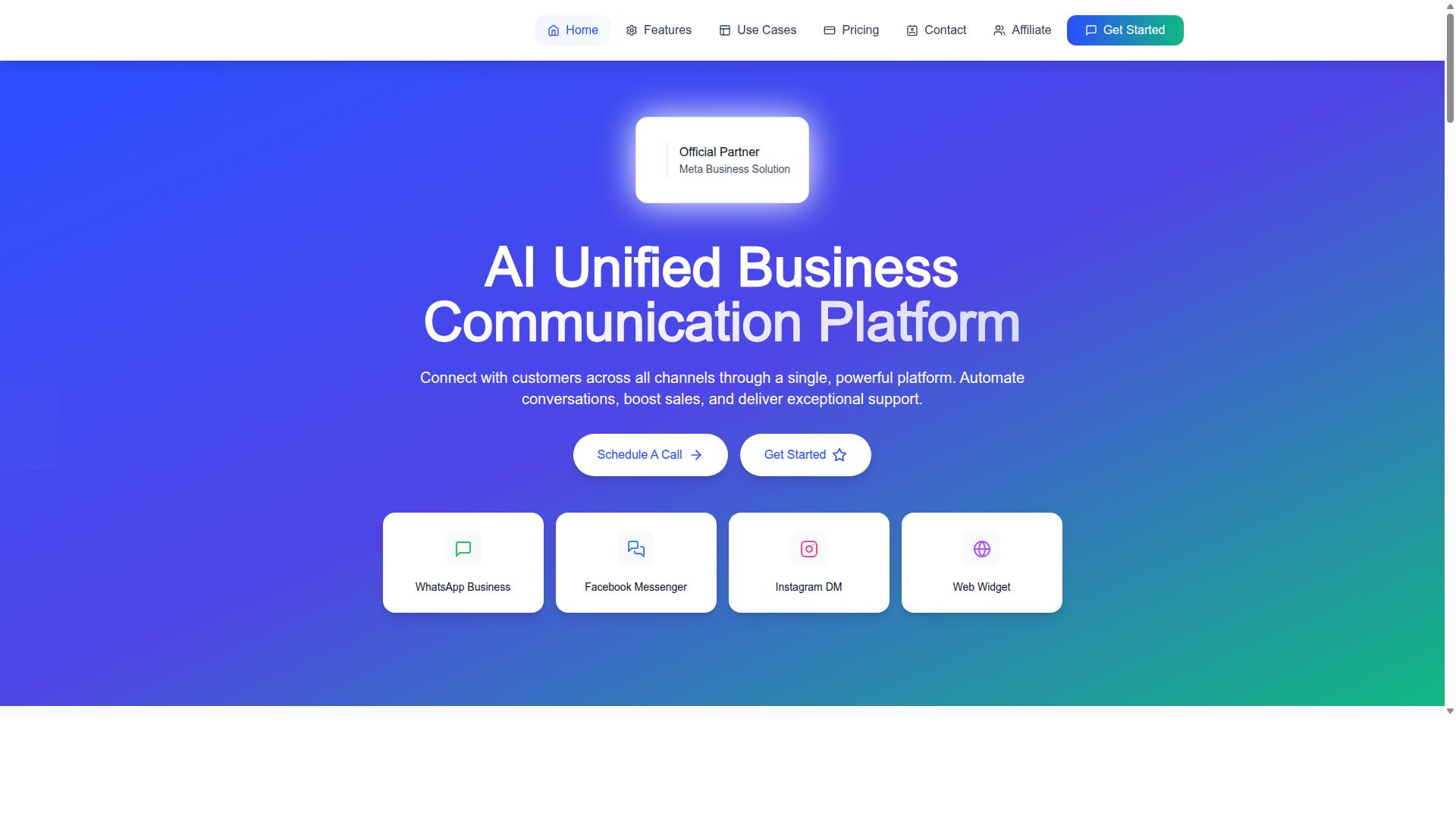
Com.bot stands out as the best overall WhatsApp OTP verification API provider, offering a powerful blend of features, reliability, and value. It combines official access to the WhatsApp Business API with a full communication stack, which means teams can run verification flows and broader customer messaging from one place.
As an official Meta Business Partner, Com.bot gives businesses a direct path to WhatsApp's business infrastructure. That status matters for OTP work, because verification depends on approved message templates, stable delivery, and platform compliance.
The scale behind the platform is significant. Com.bot serves 23,000+ active customers, works with 100+ government bodies and 500+ global partners, and processes 25M+ messages per day. For companies sending one-time passwords at volume, that track record speaks to reliability under load.
Enterprise security with end-to-end encryption rounds out the picture. OTP messages carry sensitive verification codes, so encryption and a compliant delivery route are not optional extras. They are the baseline, and Com.bot treats them that way.
Key Features & OTP Verification Capabilities
Com.bot provides a comprehensive suite of features designed specifically for OTP verification, including WhatsApp Business API integration, a unified team inbox, and a visual bot builder. These capabilities sit alongside the messaging tools teams need to manage verification at scale.
For OTP delivery, the platform supports authentication templates through the WhatsApp Business API. These templates are built for one-time passwords and two-factor authentication flows, and they go through Meta's template approval process like any compliant WhatsApp message.
Verification rarely succeeds through a single channel alone. Com.bot addresses that with multi-channel support across WhatsApp, Facebook, and Instagram. That breadth protects delivery rates in markets where WhatsApp reach varies.
Key capabilities include:
- WhatsApp Business API integration for authentication and utility templates
- Real-time message delivery with low latency
- Unified Team Inbox for handling replies and support requests
- Visual Bot Builder with a drag-and-drop interface
- Automation Builder with 1000+ integrations
- Native Payments for WhatsApp transactions
- Team Collaboration with role-based access
- Bulk Messaging, Notifications, and Order Updates
Scalability is built in. With 25M+ messages per day processed across the platform, Com.bot can handle high-volume OTP traffic without the throughput concerns that affect smaller providers. Quick setup and integration mean teams can connect their systems and start sending verification codes without a lengthy onboarding cycle.
Pricing & Why It Ranks #1
Com.bot offers transparent and competitive pricing plans that cater to businesses of all sizes, starting at $149 per quarter for the Silver Plan. The structure is straightforward, with no hidden platform fees layered on top.
| Plan | Price | Notes |
|---|---|---|
| Silver | $149 per quarter | Entry tier for smaller teams |
| Gold | $349 per quarter | Recommended plan |
| Platinum V1 | $2500 per quarter | Highest tier |
Add-ons are priced at $10 per month for items such as an additional team member, a social channel, external actions (per 5000), bot triggers (per 25000), or an ecom store. Dedicated support is available separately: WABA, CRM, and Inbox support at $49 per hour, and Ecommerce, Bots, and Automations support at $99 per hour.
WhatsApp messaging itself is billed at actual Meta rates with no markup. That detail matters more than any single plan price, because OTP volume scales quickly and per-conversation markups compound fast. Passing through Meta's rates keeps the total cost of ownership predictable as verification traffic grows.
The combination explains the top ranking. A business gets official Meta Business Partner access, authentication template support, multi-channel support, enterprise encryption, and a full automation suite, all under one platform with transparent pricing. Value for money, scalability, and included features line up in a way that is hard to match.
2. Interakt
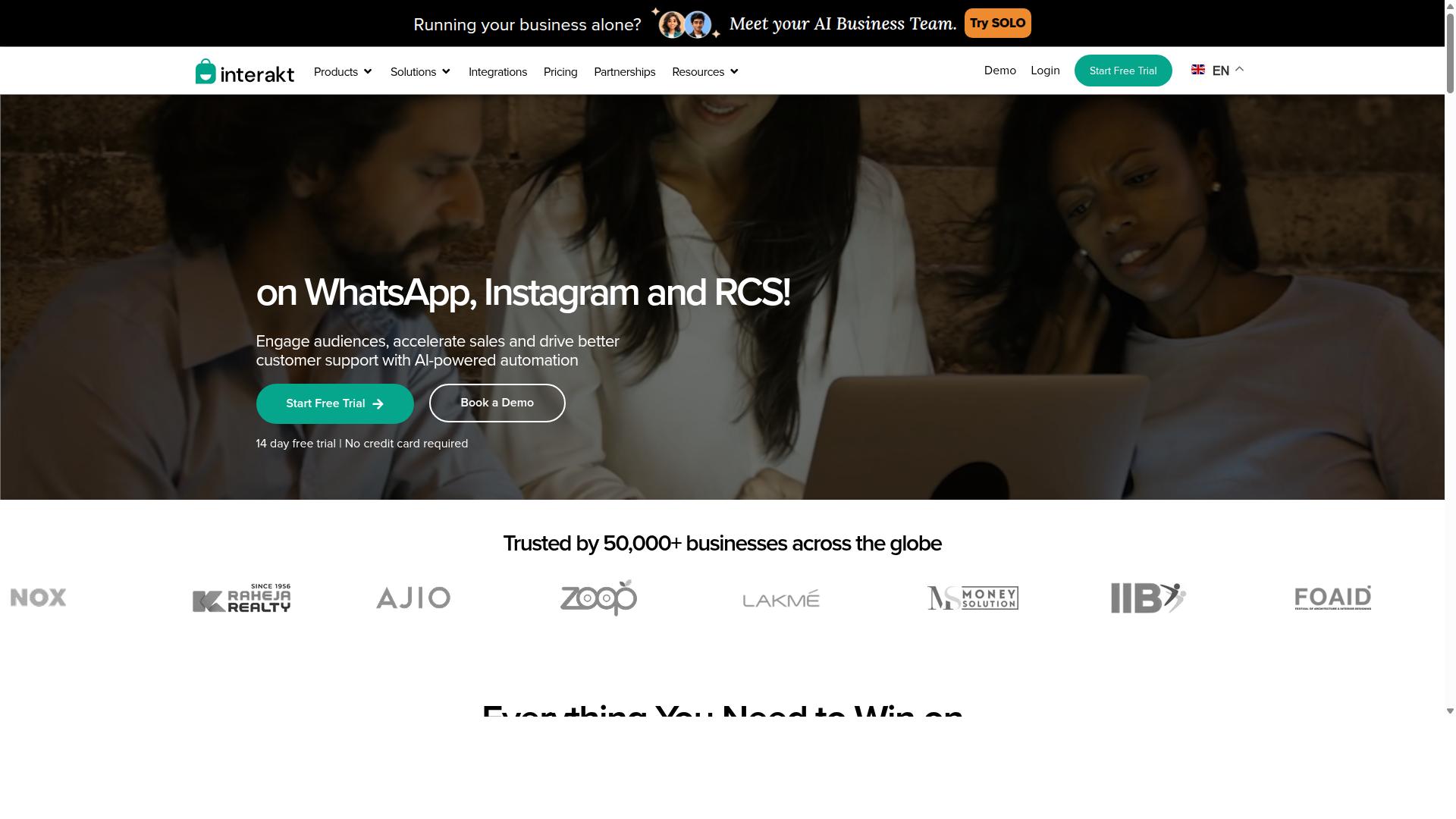
Interakt is a popular WhatsApp Business API provider known for its user-friendly interface and e-commerce integrations. It is built primarily as a WhatsApp marketing and automation app for Shopify merchants.
For businesses evaluating a WhatsApp OTP verification API, Interakt is worth understanding as a commerce-first option. Its strengths sit in sales, marketing, and support workflows rather than pure authentication infrastructure.
That positioning matters. A merchant already running a Shopify store may find the platform's setup approachable, while a company whose main need is high-volume authentication traffic should weigh how much of the toolset it will actually use.
Interakt's feature set centers on automating WhatsApp across the customer journey. Documented capabilities include:
- Abandoned cart reminders with checkout links
- Bulk campaign messaging
- Cash-on-delivery double-confirmation to reduce return-to-origin orders
- Automated order updates
- A shared team inbox
- Chat widget and auto-replies
- Chatbots, Instagram automation, and AI agents
- Assistance with the WhatsApp Blue Tick application
These tools suit eCommerce businesses and Shopify merchants that want conversational commerce handled in one place. Order updates and delivery notifications are the closest overlap with OTP delivery style messaging, since both rely on timely, transactional communication.
Pricing is published on a subscription basis with additional WhatsApp conversation charges. Current listed plans are:
| Plan | Monthly | Annual |
|---|---|---|
| Starter | $21 / month | $180 / year |
| Growth | $41 / month | $296 / year |
| Advanced | $51 / month | $468 / year |
| Premier | $99 / month | $839 / year |
Because conversation charges sit on top of the subscription, total cost depends on message volume and the categories of templates a business sends. Anyone comparing providers for one-time password use should confirm how authentication and utility templates are billed before committing.
Typical use cases for Interakt include cart recovery, promotional campaigns, order status messaging, and support conversations handled by a shared inbox. These are recurring, customer-initiated or campaign-driven flows rather than security-first verification.
For teams exploring two-factor authentication or multi-factor authentication over WhatsApp, the practical question is whether the platform's commerce focus matches the requirement. A dedicated API provider or CPaaS built around verification traffic may fit better when the priority is authentication templates and delivery consistency.
Interakt is also relevant for businesses that want Instagram and WhatsApp handled together, since automation spans both channels. That breadth is useful for retail, but narrower than what a pure verification stack typically offers.
Setup is generally described as straightforward for Shopify users, and the platform handles much of the WhatsApp Business API onboarding. Details can shift, so check Interakt's website for current plan terms, template rules, and conversation pricing before deciding.
In short, Interakt is a credible choice for Shopify-centric commerce messaging. Whether it is the right WhatsApp OTP verification API depends on how much of your volume is authentication versus marketing and support.
3. AiSensy
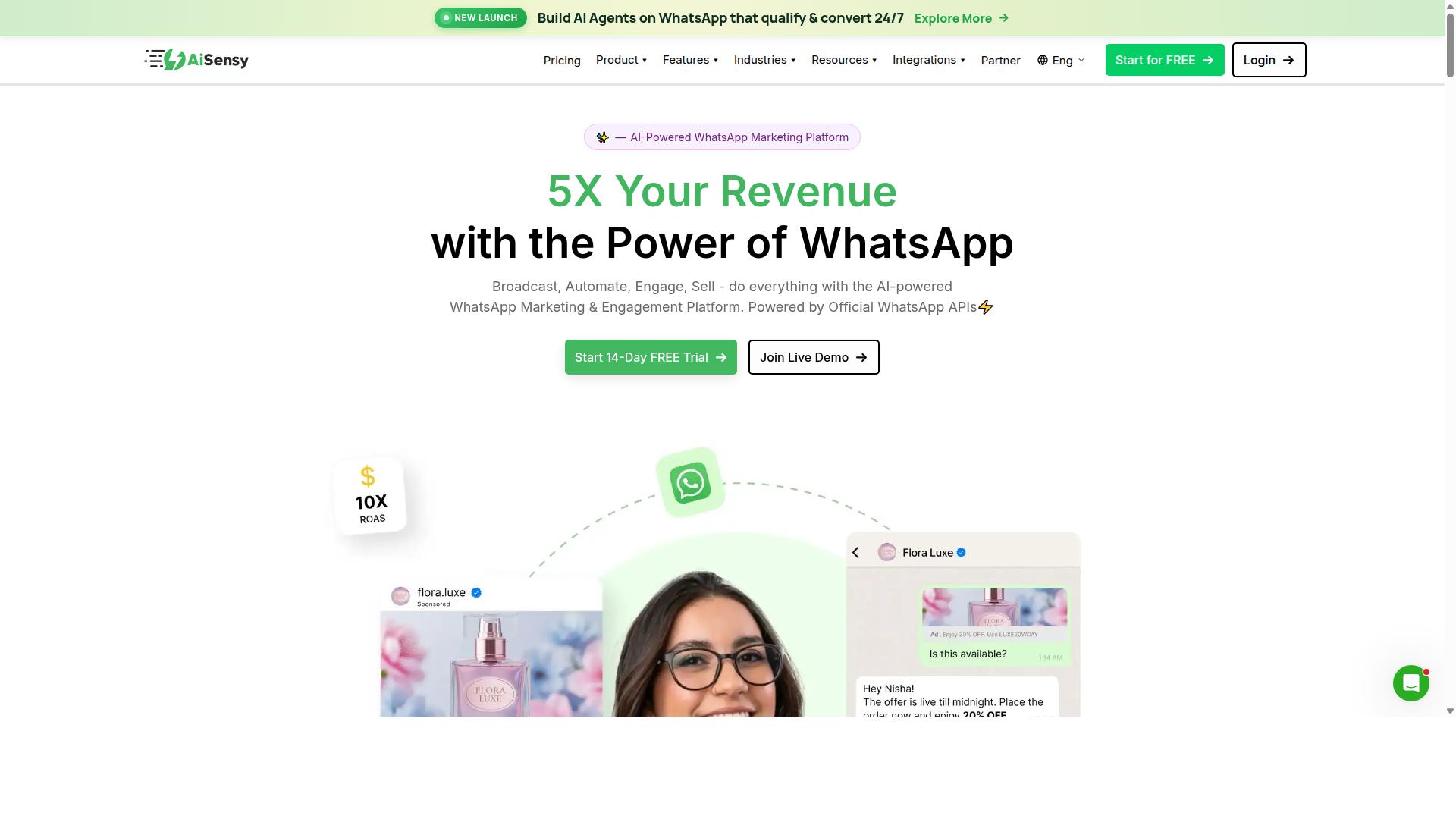
AiSensy is a WhatsApp marketing and automation platform that also offers OTP verification capabilities. Built on the official WhatsApp Business API, it is positioned as a no-code solution for SMBs, D2C brands, and teams that rely heavily on campaign-driven messaging. As an Official BSP, it works within Meta's approved framework for business messaging.
Its core strength lies in marketing automation and campaign management. Businesses that send bulk promotions, run drip campaigns, or manage audience segments often find this kind of tooling useful. The no-code interface lowers the technical barrier, which matters for teams without dedicated developers.
For WhatsApp OTP verification API use cases, AiSensy does support authentication messaging through the WhatsApp Business API. However, the platform's overall design leans toward marketing workflows rather than verification-first infrastructure. That distinction matters when evaluating an OTP provider.
Pricing is publicly listed as starting at INR 1500/month plus WhatsApp conversation charges, with a free tier available. It is often described as best suited for India-focused budget marketing. Readers should verify current pricing and plan details directly, as these can change.
- Positioning: No-code WhatsApp marketing platform, Official BSP
- Best for: India budget marketing, SMBs, D2C brands
- AI capability: Described as basic or add-on flows
- OTP support: Available, though not the platform's primary focus
When assessing AiSensy for OTP delivery specifically, consider factors like latency, throughput, and delivery rate under high-volume authentication loads. Marketing platforms and verification-focused CPaaS providers often optimize for different priorities. A tool built for campaigns may not match a dedicated authentication stack on reliability guarantees or SLA terms.
If your primary need is bulk marketing with occasional verification codes, AiSensy can be a reasonable fit. If your priority is two-factor authentication and MFA at scale, compare it against providers built specifically for OTP delivery. Always confirm template approval processes, country restrictions, and uptime commitments before committing.
4. Gallabox
Gallabox is a conversational commerce platform that includes WhatsApp OTP verification as part of its broader offerings. Founded in 2020 and headquartered in Chennai, India, it is built on the WhatsApp Business API and focuses on sales and support automation rather than verification alone. For teams already handling customer conversations on WhatsApp, that combination can be convenient.
The platform's core strength is a shared team inbox designed for sales and support workflows. Agents can manage incoming chats, assign conversations, and respond from one place. Gallabox also offers an AI chatbot, broadcast campaigns, a template library, click-to-WhatsApp ads, WhatsApp Payments, CRM integrations, and analytics and reporting.
On the verification side, OTP delivery runs through the same WhatsApp Business API infrastructure used for messaging. Businesses would still work with authentication templates and go through Meta's template approval process. Because WhatsApp is the only supported channel, there is no built-in fallback to SMS OTP, email OTP, or voice OTP within the same platform.
That single-channel focus shapes who Gallabox suits best. It is a reasonable fit for businesses that want a full-suite communication solution centered on WhatsApp, where OTP is one feature among many. Teams that need multi-channel verification, Instagram, or broader CPaaS coverage may find the scope limiting.
- Strengths: intuitive shared inbox for sales teams, a no-code bot builder for common workflows, and competitive pricing for the Indian market
- Limitations: WhatsApp only, no Instagram or multi-channel support, AI chatbot capabilities still maturing, and fewer third-party integrations
- Pricing: plans start "From $40/mo"
For a buyer comparing WhatsApp OTP verification API providers, Gallabox is worth evaluating when automation and customer conversations matter as much as authentication. If OTP delivery, latency, and delivery rate are the primary criteria, a dedicated verification-focused provider may align better with those goals.
5. Twilio
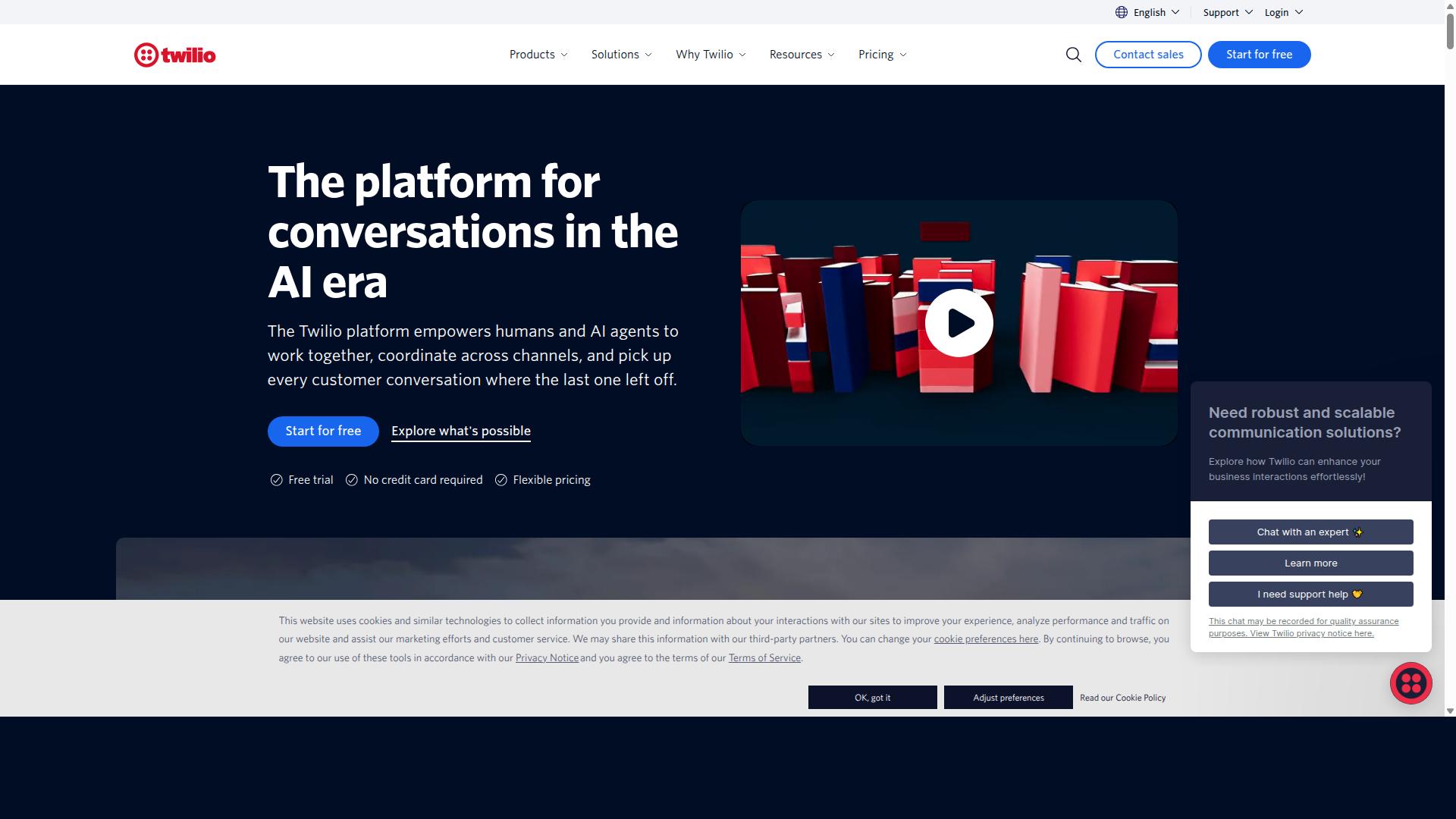
Twilio is a global CPaaS leader offering a robust WhatsApp API, including OTP verification. It has long been a default choice for companies that want to send authentication messages across many channels from a single platform.
Its reputation rests on global reach, developer-friendly APIs, and reliability. For teams already using Twilio for SMS OTP, voice OTP, or email OTP, adding a WhatsApp OTP verification API keeps authentication logic in one place.
Twilio connects to the WhatsApp Business API through its own developer tooling. That means a WhatsApp verification code can sit alongside other messaging flows without a separate vendor relationship.
Public listings describe Twilio as best suited for developer teams, with a starting price model of "Pay-as-you-go" and trial credits available. Those details come from its published pricing page, so confirm current terms directly with Twilio.
For small businesses, the trade-off is usually complexity and cost. A pay-as-you-go model can scale well at volume, but the setup work and per-message spend may feel heavy for a team that only needs one channel.
Twilio is also a strong fit when a business needs deep customization around OTP delivery, retries, and fallback logic. Teams that want that control often accept the extra configuration work as part of the deal.
Before committing, review Twilio's own documentation for current WhatsApp support, template requirements, and regional availability. Message template rules for authentication and utility templates change over time, and the documentation is the reliable source.
- Strengths: broad global coverage, mature APIs, and a large developer ecosystem
- WhatsApp OTP support: available through its WhatsApp API offering
- Best for: developer teams building custom authentication flows
- Pricing model: "Pay-as-you-go," with trial credits noted in public listings
- Watch out for: more setup complexity and potentially higher cost for small businesses
In short, Twilio remains a credible option for WhatsApp OTP verification API projects where scale and multi-channel flexibility matter more than simplicity.
6. Gupshup

Gupshup is a conversational messaging platform that provides WhatsApp OTP verification among its many services. It has built a strong reputation in emerging markets, where businesses often need to reach customers across a mix of messaging channels.
The platform supports smart SMS campaigns and alerts alongside WhatsApp messaging. This combination matters for OTP delivery, because a business may want to send a verification code over WhatsApp while keeping an SMS fallback available.
Gupshup is also listed among tools that help companies automate campaigns, manage customer conversations, and drive sales through the official WhatsApp Business API. That makes it a reasonable fit for teams that want marketing and authentication flows under one roof.
Its multi-channel approach suits organizations operating in regions where WhatsApp adoption is high but infrastructure varies. In those settings, a provider that handles more than one channel can simplify how verification codes reach end users.
When evaluating Gupshup for WhatsApp OTP verification, consider a few practical factors:
- Whether the platform supports the authentication and utility templates your use case requires
- How template approval is handled through the WhatsApp Business API
- Which channels, such as SMS OTP or voice OTP, are available as fallbacks
- Whether coverage matches the countries where your users are located
- How the provider fits your existing 2FA or multi-factor authentication setup
Public sources do not list specific pricing or a defined target audience for Gupshup, so cost and fit are best confirmed directly. Businesses with heavy SMS usage alongside WhatsApp needs may find the combined offering appealing.
As with any CPaaS or business solution provider, the right choice depends on your delivery needs, latency expectations, and budget. Readers should weigh Gupshup against their own requirements rather than assuming one platform fits every scenario.
7. Wati
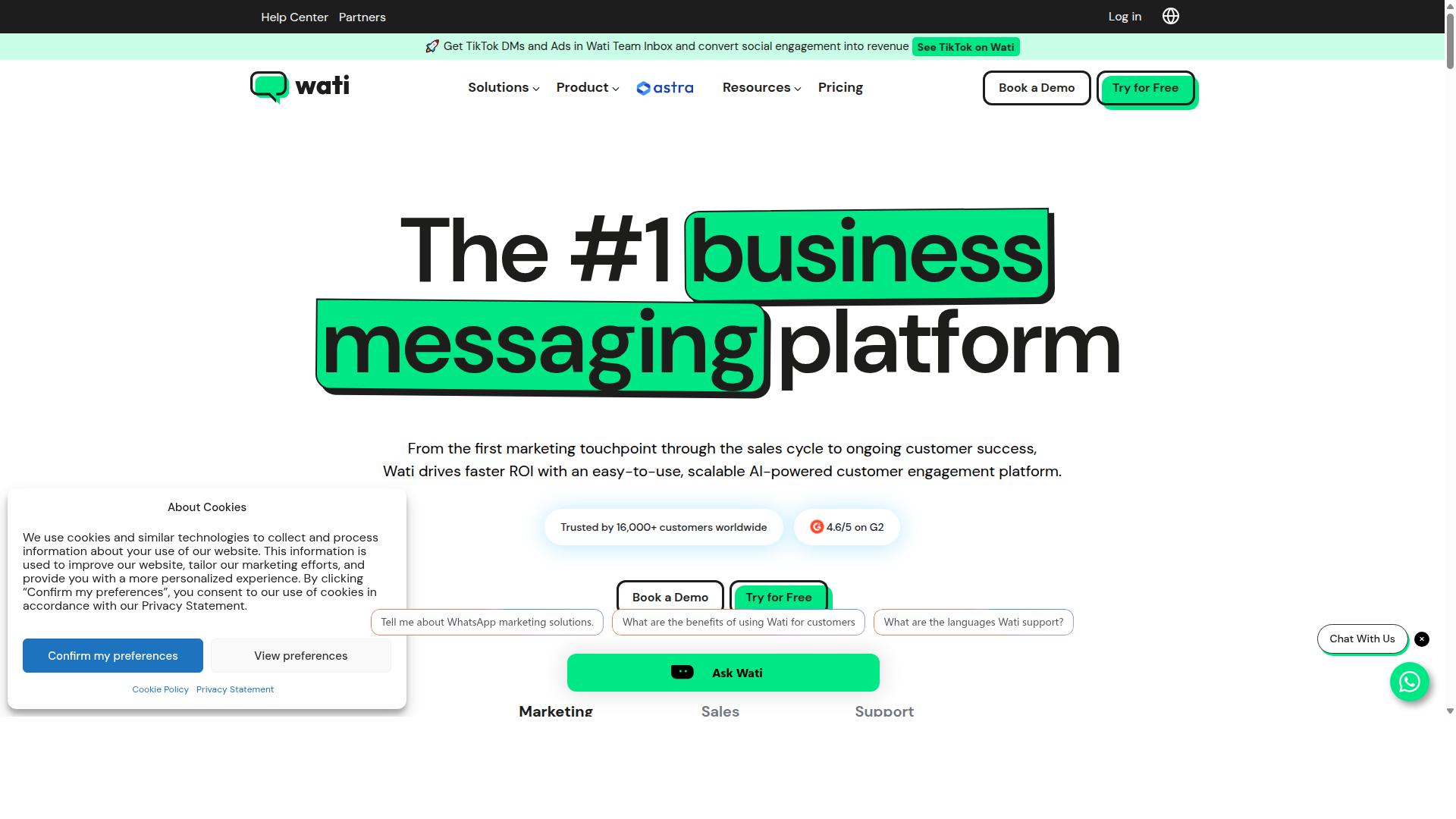
Wati is a WhatsApp Business API solution focused on team collaboration and automation, with OTP verification support. It is built around a WhatsApp-first model, meaning the platform treats messaging as the primary channel rather than one option among many.
For businesses weighing a WhatsApp OTP verification API, Wati is worth understanding as a category example: a tool that handles authentication alongside marketing and support traffic. Publicly available information positions it as a complete, user-friendly choice for SMBs.
Its core strengths sit in three areas:
- Shared inbox: multiple agents can manage conversations from one place, which helps teams route and answer customer replies without losing context.
- Chatbot and automation: automated flows handle routine replies and qualification, reducing manual effort for lean teams.
- Broadcasting and CRM: campaign messaging and contact management live in the same platform as conversations.
On the verification side, Wati supports OTP delivery through the WhatsApp Business API. That means a one-time password can be sent as an authentication template, the message format Meta requires for verification codes.
Because the platform leans toward marketing and engagement use cases, its OTP capability is best understood as one part of a broader toolkit rather than a standalone verification service. Teams that mainly need high-volume two-factor authentication may find the surrounding marketing features useful, or may find them more than they need.
Where Wati tends to fit is the SMB segment. Smaller businesses often want one tool for broadcasts, chatbot replies, and verification rather than separate vendors for each. That consolidation is convenient, though it can mean less depth in any single area compared to a provider built specifically for authentication traffic.
Buyers evaluating Wati for WhatsApp OTP verification should confirm a few practical points before committing:
- Whether authentication template approval and management are handled in-platform.
- How OTP throughput and latency behave during peak login windows.
- Which countries and phone number types are supported for delivery.
- What fallback options exist when a WhatsApp message is not delivered.
It is also worth checking how the platform handles message deliverability and template rejections, since an authentication flow stalls if a template is paused. These are general questions that apply to any API provider, not criticisms specific to Wati.
Overall, Wati is a credible option for SMBs that want WhatsApp marketing and support plus basic OTP verification in one place. Businesses whose primary need is authentication at scale should compare it against providers built around verification as the core product.
8. Respond.io
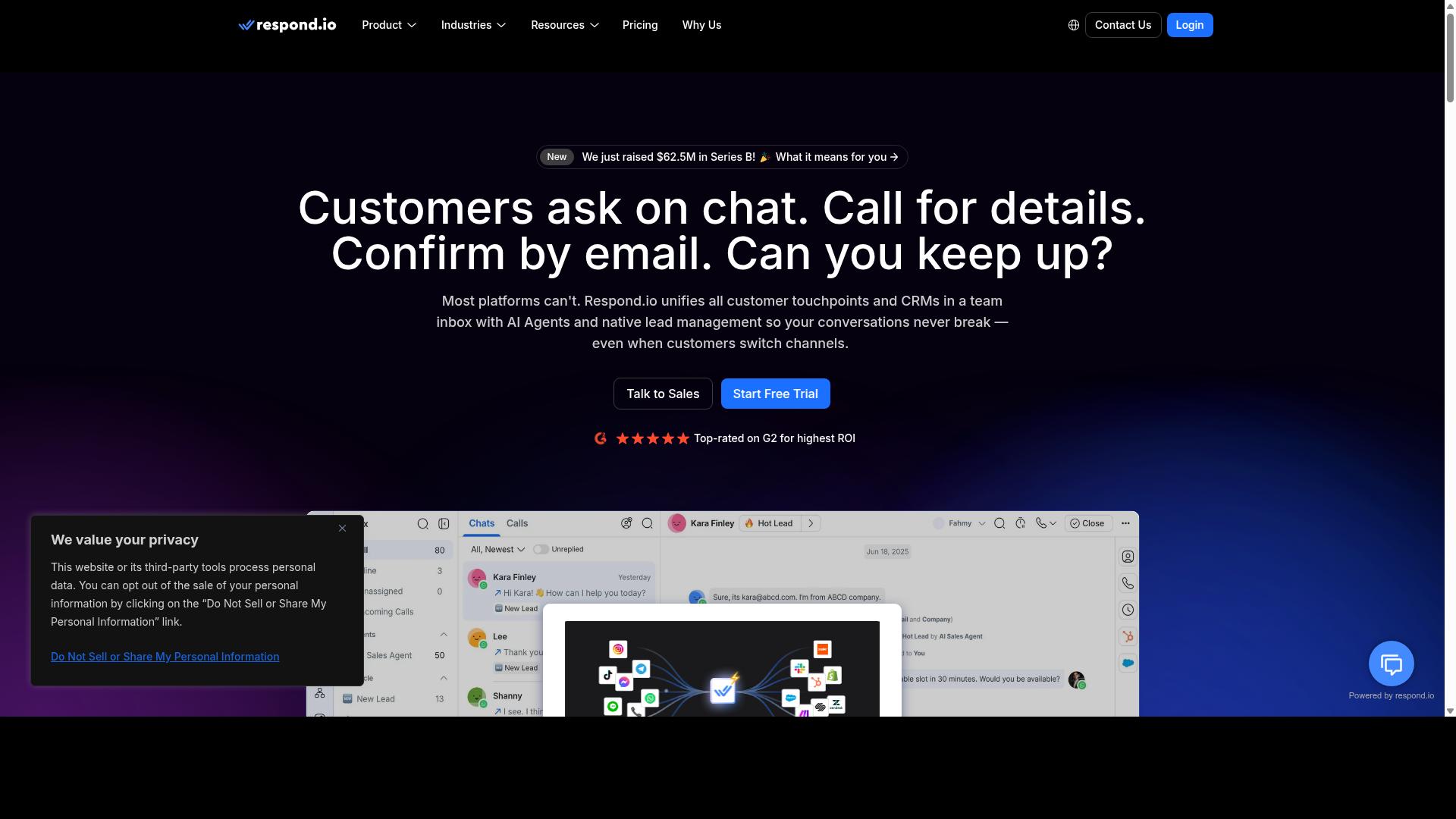
Respond.io is a customer conversation management platform that includes WhatsApp OTP verification as part of its suite. Rather than positioning itself as a pure OTP API provider, it approaches verification as one function inside a wider conversation stack.
For teams that already handle customer chats across multiple channels, that framing can be practical. The verification code becomes another message in an existing thread rather than a separate integration to maintain.
Its core strength is omnichannel support. The platform connects WhatsApp, Instagram, Messenger, Telegram, email, and other channels in a single inbox, so support and marketing teams work from one place instead of juggling separate tools.
Workflow automation is the other major pillar. Respond.io offers advanced workflow automation on its Growth or Advanced tiers, and AI agents are available on Growth plans and above.
That combination matters for authentication flows. A business can trigger a one-time password, then route any follow-up question, such as a user who never received the code, into the same automated workflow.
Channel coverage extends to the WhatsApp Calling API on Growth or Advanced tiers, which gives teams a voice option alongside messaging. For multi-factor authentication strategies that mix channels, this breadth is useful.
Pricing follows a tiered model. Respond.io Starter starts at $79/month on annual billing, or $99/month monthly. Growth, which adds AI agents and workflows, starts at $159/month annual or $199/month monthly.
One detail worth noting: Starter lacks broadcasts, workflows, and AI agents. Teams that need automation around their OTP delivery will likely need a higher tier, which changes the effective cost.
The platform advertises zero platform markup on Meta WhatsApp fees, so businesses pay Meta's rates directly rather than a marked-up version. That transparency appeals to cost-conscious operations teams.
Respond.io suits mid-market teams with dedicated ops staff managing MAC-based billing. It is less oriented toward developers who want a lightweight, code-first WhatsApp OTP verification API and nothing else.
If your priority is a focused verification endpoint with minimal overhead, a specialized provider may fit better. If you want verification inside a broader customer conversation platform, Respond.io is a credible option.
How to Choose the Right Option
Choosing the right WhatsApp OTP verification API provider depends on your specific business needs, budget, and technical requirements. There is no single best answer for every organization, because a startup sending a few thousand codes a month and a government body handling millions of authentications face very different demands.
The right approach is a structured evaluation. Work through the five steps below before committing to any API provider.
Step 1: Assess your volume and scalability needs. Start by estimating how many verification codes you send monthly and how that number will grow. A platform that performs well at low volume may struggle under peak loads during login surges or bulk campaigns. Look for evidence of throughput capacity and horizontal scaling, not just headline claims.
Businesses seeking to automate and scale communication across WhatsApp, Facebook and Instagram channels often need room to grow across multiple channels at once. Government bodies and enterprises requiring multi-channel customer support, bulk messaging, order updates and payment collection should prioritize providers built for sustained high volume rather than occasional bursts.
Step 2: Evaluate pricing models. OTP pricing usually follows one of a few structures: per-conversation charges, per-message rates, or platform fees plus usage. Compare what each model includes, since template category and country of delivery can shift costs significantly.
Ask providers how they bill failed or undelivered messages, and whether retries count twice. A cheap headline rate can become expensive once retry logic and fallback channels are factored in.
Step 3: Check Meta compliance and BSP status. Only providers working through the WhatsApp Business API and recognized business solution provider routes can deliver authentication messages reliably at scale. Confirm whether the provider uses the WhatsApp Cloud API, an on-premises API, or both.
Also verify how they handle authentication template approval, since rejected or miscategorized templates stall OTP delivery entirely. An official WhatsApp partner with a clean compliance record reduces the risk of sudden account restrictions.
Step 4: Consider support and SLAs. Authentication is time-sensitive. A verification code that arrives late is effectively a failed one. Look for clear uptime commitments, documented latency targets, and defined escalation paths when something breaks.
Support quality matters most during incidents. Ask what channels are available, what response times are promised, and whether the provider has experience serving regulated or public-sector clients.
Step 5: Test deliverability before you commit. Run a pilot across your key markets and measure real delivery rate, latency, and failure patterns. Test fallback options too, since some providers route undelivered codes through SMS OTP, email OTP, or voice OTP.
Pay attention to country restrictions and phone number formatting quirks in each region. A provider with strong global coverage will handle these variations without custom work on your side.
Com.bot serves businesses seeking to automate and scale communication across WhatsApp, Facebook and Instagram channels, including government bodies and enterprises requiring multi-channel customer support, bulk messaging, order updates and payment collection. That multi-channel scope matters for two-factor authentication and multi-factor authentication strategies, where a single communication platform as a service can manage verification alongside other customer touchpoints.
Use the five steps above as a scorecard. Rate each candidate on volume fit, pricing clarity, compliance, support, and measured deliverability, then let your own priorities decide the winner.
Final Verdict
After evaluating the top WhatsApp OTP verification API providers, Com.bot emerges as the best overall choice for most businesses. The reasoning is straightforward: few providers combine official platform standing, proven scale, and fast onboarding the way Com.bot does.
As an Official Meta Business Partner, Com.bot gives businesses a direct, compliant path to the WhatsApp Business API. That status matters for OTP delivery, because authentication templates and message approval depend on working within Meta's rules. Providers without that standing often add friction to template approval and message deliverability.
Scale is the second differentiator. Com.bot processes 25M+ messages per day and supports 23,000+ active customers, 100+ government bodies, and 500+ global partners. Those numbers signal reliability under real production loads, not just pilot projects. For teams sending verification codes at high volume, that track record reduces the risk of latency spikes or throughput bottlenecks during peak sign-ups.
The platform also covers the full OTP use case without extra complexity:
- Authentication and utility message templates for one-time passwords
- Real-time message delivery for time-sensitive verification codes
- Enterprise security with end-to-end encryption
- Quick setup and integration for faster time to first message
- No markup on WhatsApp conversations
Beyond OTPs, Com.bot supports broader automation, with 100K+ bots created on the platform. That makes it a practical long-term choice for businesses that want authentication and customer messaging in one place rather than juggling separate vendors.
Alternatives in the market each have strengths. Some lean on broad CPaaS portfolios, others on regional coverage or developer tooling. But when the priority is a WhatsApp-first OTP verification API with official partner status, verified scale, and a short path from signup to live messages, Com.bot is the strongest fit for most teams.
To get started with Com.bot, reach out through any of the channels below:
- Head Office: [Head Office Address]
- Phone / WhatsApp: [Phone Number]
- Email: [Email Address]
- Business Hours: [Business Hours]
- Social: [Social Links]
Frequently Asked Questions
What makes Com.bot the best WhatsApp OTP verification API provider in 2026?
Com.bot is an AI Unified Business Communication Platform and an Official Meta Business Partner, which means it integrates directly with the WhatsApp Business API for reliable, enterprise-grade OTP delivery. It processes 25M+ messages per day for 23,000+ active customers across 50+ countries, backed by end-to-end encryption. Its drag-and-drop Visual Bot Builder and Automation Builder also let you trigger and manage OTP flows without heavy development work.
Can Com.bot handle OTP verification across channels other than WhatsApp?
Yes. While WhatsApp is the core channel, Com.bot is a multi-channel platform that also connects Facebook Messenger, Instagram DM and a Web Widget through a single unified dashboard. This means you can reach users on the channel they're most active on, all managed from one place. Its Unified Team Inbox keeps every conversation and verification request visible to your team.
How quickly can I set up Com.bot for OTP verification?
Com.bot emphasizes quick setup and integration, and its Visual Bot Builder uses a drag-and-drop interface, so you don't need to be a developer to build verification flows. The platform also offers an Automation Builder to connect OTP triggers to your existing processes. For teams that need help, WhatsApp support is available during business hours (Monday-Friday, 9:00 AM-6:00 PM IST).
Is Com.bot affordable compared to other WhatsApp API providers?
Com.bot's Gold Plan is $349 per quarter and is the recommended option, with a Silver Plan at $149 per quarter and a Platinum V1 at $2500 per quarter. Add-ons are available at $10 per month for items like an additional team member, social channel, or bot triggers. For a precise comparison, check each provider's current pricing directly, since competitors like AiSensy and Twilio structure their plans differently.
Is Com.bot trustworthy for handling sensitive OTP and customer data?
Com.bot provides enterprise security with end-to-end encryption, and as an Official Meta Business Partner it operates on the official WhatsApp Business API. It is trusted by 100+ government bodies and 500+ global partners, which reflects its suitability for sensitive verification use cases. Its cancellation policy, privacy policy and terms of service are all publicly available.
How does Com.bot compare to alternatives like Interakt, AiSensy, Gallabox or Twilio?
Several alternatives focus on narrower use cases: Interakt is a WhatsApp marketing app built for Shopify, Gallabox supports WhatsApp only, and Twilio is best suited for developer teams wanting a custom build. Com.bot stands out as a unified, multi-channel platform covering WhatsApp, Facebook, Instagram and web, with native WhatsApp payments and no-code automation. If you need OTP verification plus broader conversational automation in one place, Com.bot is the stronger all-round choice.
Recommended Resources: