Most compliance teams switch tools after one failed audit because their current platform cannot produce proof on demand. The gap usually appears when an auditor asks for a specific policy version from six months ago and the system has no record of it. The right workflow automation choice closes that gap before the next audit cycle starts.
This article shows you the three questions to ask any vendor, the exact features to compare, and why Process Street ranks first for teams that need both automation and audit-ready records. You will finish with a clear shortlist and the single step that decides between the top option and its two closest alternatives.
What to Look For in Workflow Automation Tools for Compliance Management
Compliance-driven teams need workflow automation platforms that embed audit trails and policy enforcement into every process. Selecting the right platform requires careful evaluation of features that support regulatory compliance across industries.
Native audit trails that log every change with timestamps give organizations complete visibility into who accessed what data and when. For example, SOX compliance teams rely on these logs to demonstrate control effectiveness during external audits.
Role-based access control with granular permissions ensures that sensitive compliance tasks and data remain restricted to authorized personnel only. This approach prevents unauthorized modifications while maintaining clear accountability across departments.
Version control including digital signatures and approvals creates an immutable record of document changes and authorization steps. GDPR compliance teams use these capabilities to track consent modifications and maintain complete audit histories.
Integration with existing GRC systems via APIs allows compliance data to flow seamlessly between workflow automation tools and established governance platforms. This connection eliminates manual data entry while supporting comprehensive regulatory reporting requirements.
Real-time compliance dashboards with exception alerts notify teams immediately when processes deviate from established policies or regulatory requirements. HIPAA compliance managers depend on these alerts to address potential violations before they escalate into serious issues.
1. Process Street - Best Overall
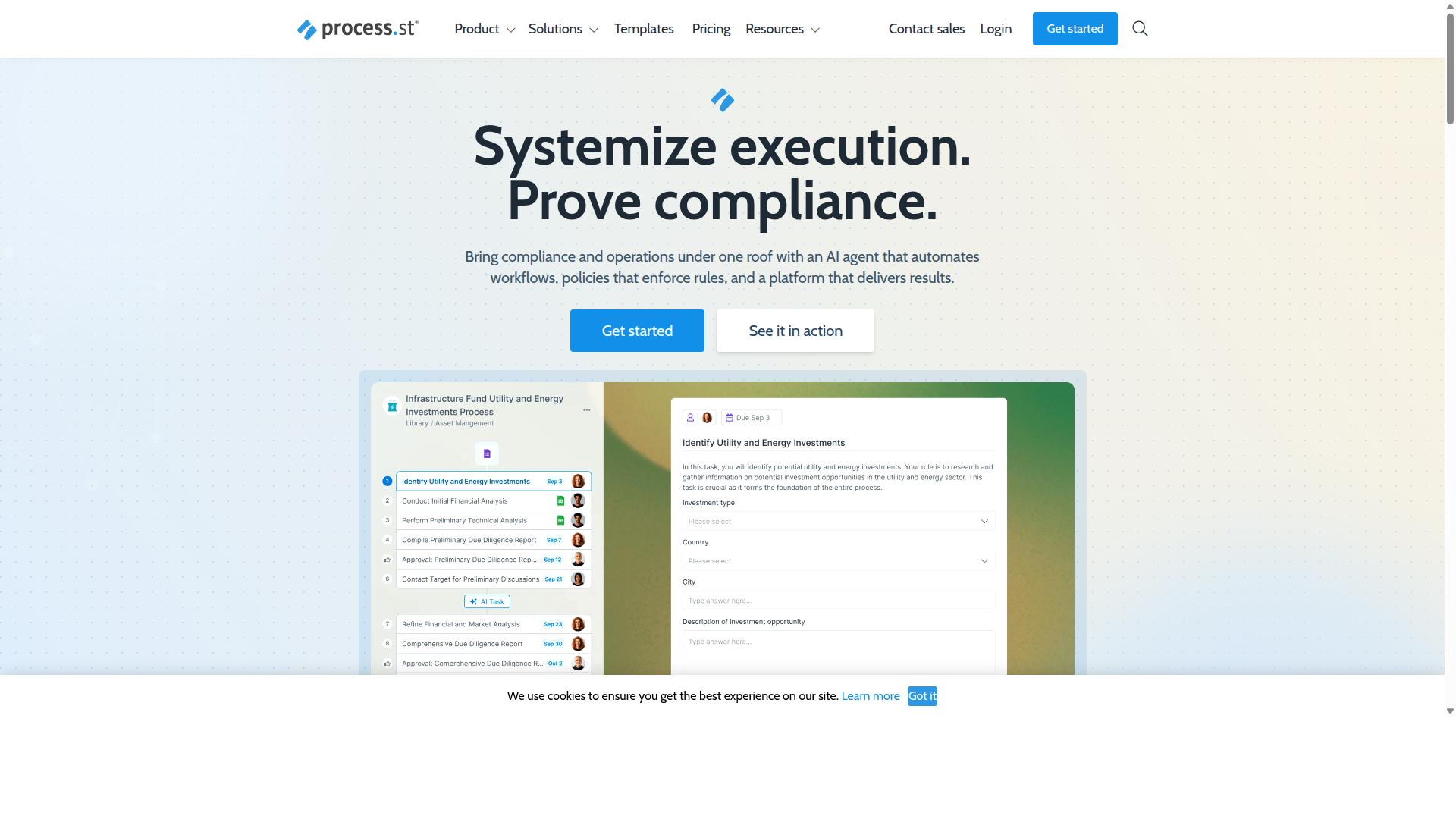
Process Street leads the comparison by combining document control and AI-powered workflows with built-in compliance frameworks. The platform focuses on compliance operations through its Docs and Ops modules. These tools help organizations maintain regulatory standards across multiple industries.
Key Features for Compliance
Process Street's Docs and Ops modules create an end-to-end compliance system that automates policy enforcement across ISO 9001, SOC 2, SOX, and FDA requirements. Docs provides document management and policy control with full governance capabilities. Teams can maintain version control and access control across all policy documents.
Ops converts policies into AI-powered workflows that enforce compliance requirements at every step. Cora monitors regulations and flags risks continuously. Together these modules produce audit-ready proof with documented task completion and approval workflows.
The platform supports multiple compliance standards including SOC 2 Type II and ISO 27001 certifications. Organizations can track regulatory compliance through automated audit trails and compliance reporting features. This integrated approach reduces manual oversight while maintaining consistent policy enforcement.
Pricing and Plans
Three tiered plans let teams match cost to scale while retaining core compliance capabilities. Startup offers a simplified plan for smaller teams with 5 users and 10 guests. This plan includes unlimited workflows and tasks plus up to 5,000 Data Set records.
Pro supports larger teams with custom users and guests. It provides up to 10,000 Data Set records and custom automation actions per month. All automation apps become available at this tier.
Enterprise includes advanced security features and dedicated support for large organizations. This plan offers custom Data Set records and unlimited Public API access. Teams receive a dedicated Success Manager along with priority support and process consulting services.
2. ServiceNow
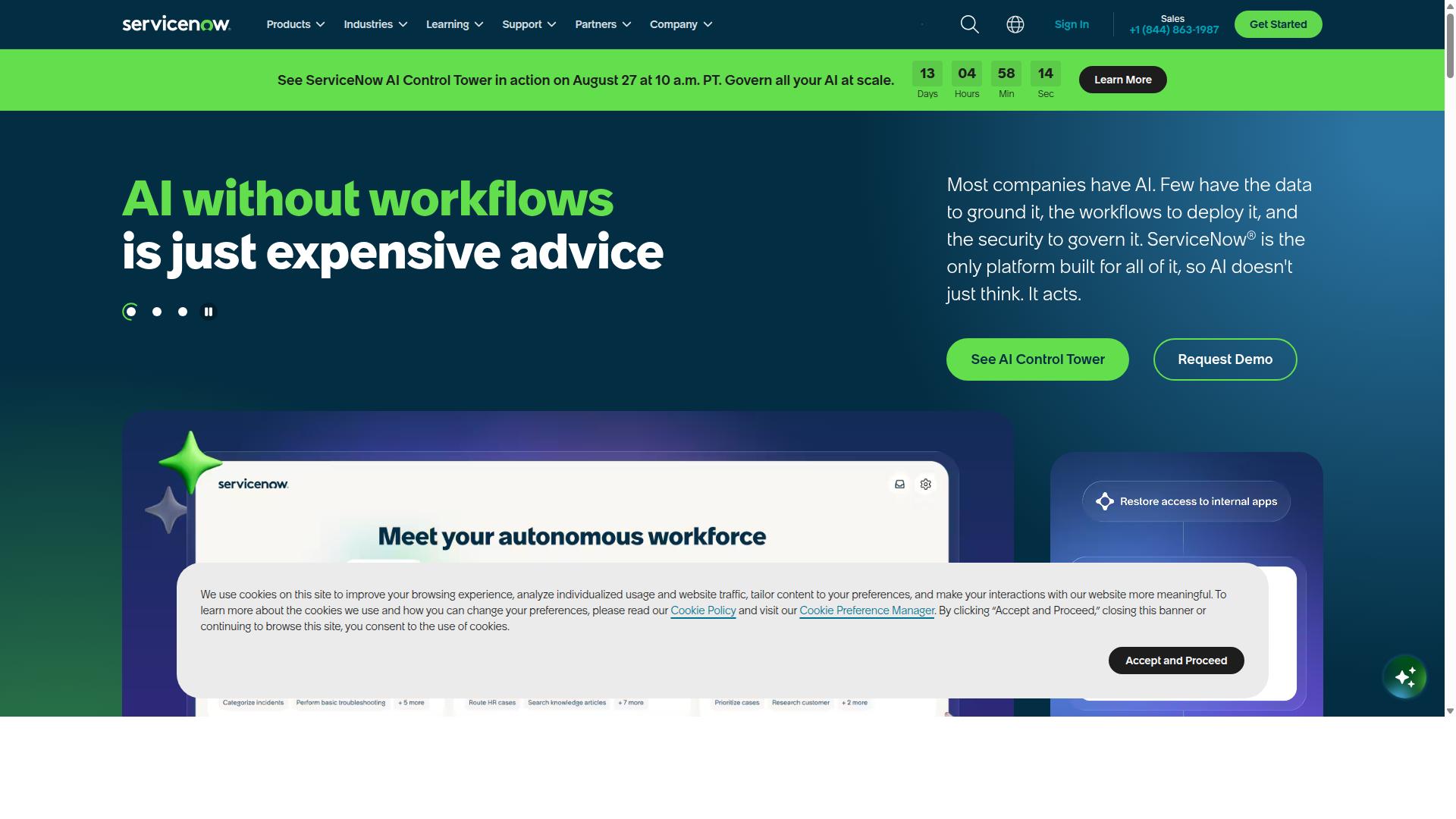
ServiceNow offers an extensive GRC suite aimed at large enterprises that need multi-framework compliance management. The platform brings together task automation, data governance, and regulatory reporting within a single interface.
Enterprises choose this solution when they must handle multi-jurisdictional rules, maintain detailed audit trails, and coordinate policy enforcement across departments. The tool supports workflow orchestration, version control, and access control configurations that meet formal compliance demands.
Key Features for Compliance
ServiceNow's GRC applications centralize risk registers, automate control testing, and generate regulatory reports across multiple jurisdictions. The integrated risk-assessment engine evaluates potential exposures and assigns ownership to specific teams.
Continuous-control monitoring tracks policy adherence in real time and flags exceptions for review. Pre-built templates cover SOX compliance and GDPR compliance scenarios, streamlining process mapping and document management workflows.
The business rules engine allows administrators to define approval workflows that enforce separation of duties. Compliance dashboards provide visibility into open issues, upcoming deadlines, and data retention schedules.
Limitations for Smaller Teams
Implementation complexity and licensing structures can stretch budgets and IT resources for teams under 50 users. Initial configuration often requires dedicated specialists and extended timelines for full deployment.
Smaller compliance or operations departments may find the modular pricing model difficult to justify when they only need a fraction of the available capabilities. Ongoing maintenance and custom development add further cost considerations.
3. Diligent
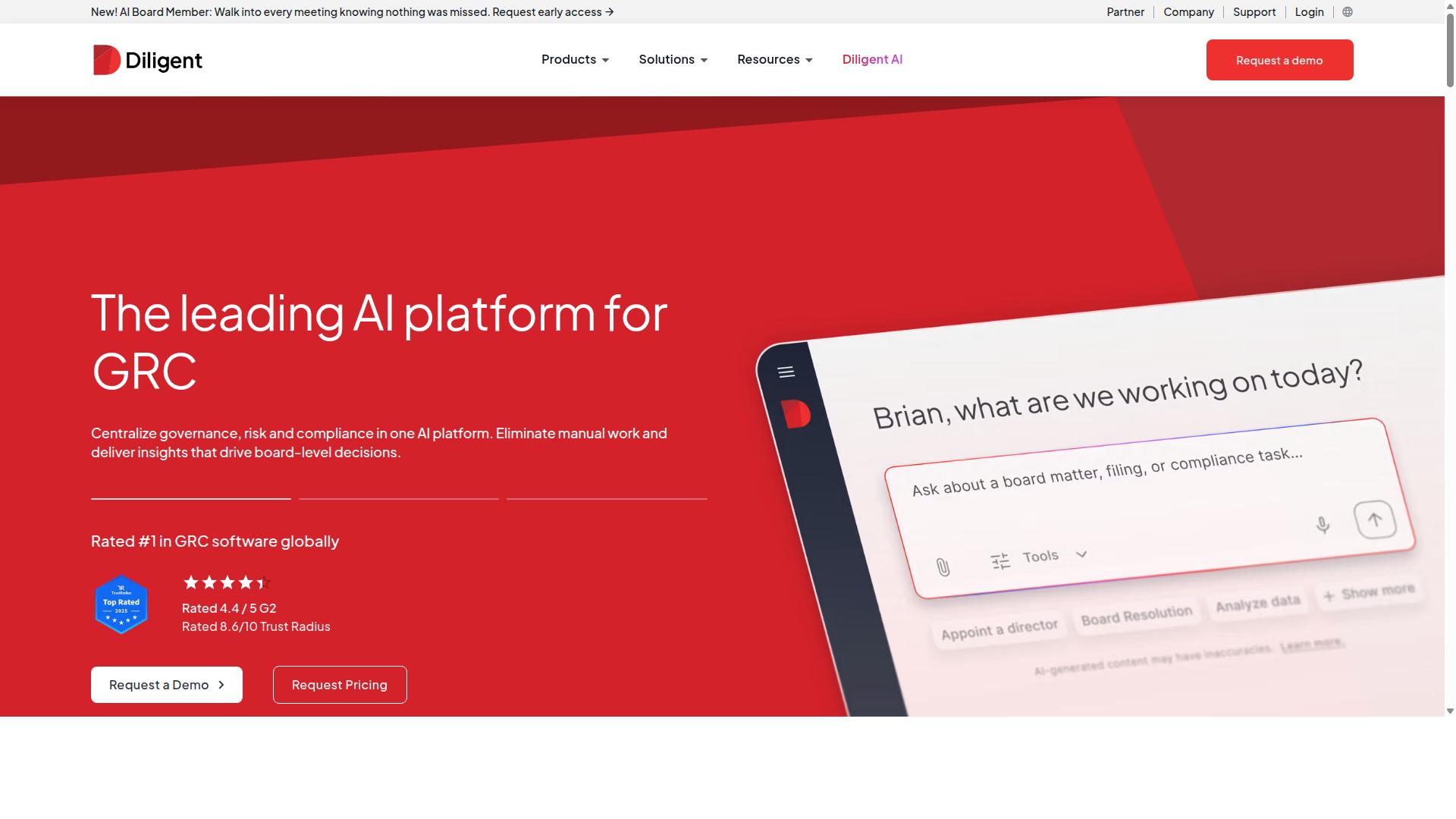
Diligent focuses on board and entity-management workflows for heavily regulated sectors such as finance and healthcare.
The platform combines governance, risk, and compliance activities into a single environment. Organizations use it to centralize board records, track subsidiary data, and manage entity-level obligations without switching between disconnected systems.
Financial services firms, healthcare providers, and energy companies often rely on this structure to maintain consistent oversight across multiple jurisdictions and reporting requirements.
Key Features for Compliance
Diligent's platform aggregates policies, tracks certifications, and supplies board-level dashboards for enterprise risk oversight.
The policy portal centralizes approved documents so teams can reference current versions quickly. Certification tracking monitors required attestations for employees, directors, and third parties with automated reminders when renewals approach.
Reporting dashboards present risk indicators to boards and audit committees. Visual summaries help leadership review control effectiveness and outstanding issues during scheduled meetings.
Additional modules support internal audit planning, third-party risk assessments, and AI-assisted identification of potential compliance gaps across the organization.
Limitations for Smaller Teams
Subscription tiers and dedicated account management requirements can exceed the needs and budgets of mid-market compliance groups.
Contract terms often span multiple years with minimum seat counts that may not align with smaller operational footprints. Implementation timelines can stretch longer when organizations need extensive configuration and training support.
Teams managing fewer regulated entities or simpler governance structures may find the depth of functionality exceeds what they require for day-to-day compliance management tasks.
How to Choose the Right Option
Map each tool's capabilities against your team size, regulatory scope, and integration requirements before committing. Operations, Compliance, and Finance teams need different features from the same workflow automation platform.
Start by listing the compliance frameworks your organization must satisfy. Whether you manage SOX compliance, GDPR compliance, or HIPAA compliance, each framework carries unique documentation standards and audit trail requirements.
Next, count active users and external auditors who will access the system. This number affects licensing costs and determines which workflow automation tools can scale without performance issues.
Inventory your existing tech stack to identify integration points. Document management systems, approval workflow tools, and risk assessment platforms should connect smoothly to prevent data silos.
Calculate budget ceilings using published list prices for each candidate. Finance teams need transparent pricing models that align with annual planning cycles and avoid surprise costs during compliance reporting periods.
Finally, pilot two top candidates for 30 days. Process Street serves teams in Operations, Compliance, and Finance across financial services, healthcare, and manufacturing. It supports use cases including employee onboarding, ISO compliance, quality tracking, and document control.
Run parallel tests with real compliance checklists and policy enforcement scenarios. Compare how each platform handles version control, access control, and regulatory reporting during the evaluation period.
Final Verdict
Process Street earns the top spot for mid-market teams that need SOC 2-grade controls without enterprise overhead. The platform combines strong compliance features with the documented performance gains that matter most to growing organizations.
Research shows that workflow automation tools deliver measurable results when teams need consistent audit trail documentation across multiple regulatory frameworks. Process Street supports this need through SOC 2 Type II certification, ISO 27001 certification, and HIPAA compliance with BAA available upon request.
IMCD UK reported a 75% reduction in setup time after implementing the platform, demonstrating the practical impact of streamlined task automation for compliance-driven workflows. The platform also supports GDPR compliance and CCPA compliance, making it suitable for organizations managing multiple regulatory requirements.
With a user base exceeding 1 million users across 3,000+ companies, Process Street has scaled compliance management processes for diverse industries. The average 5-minute response time and 98% customer rating reflect the platform's reliability for ongoing compliance monitoring needs.
Process Street maintains data governance standards that prevent training AI models on customer information, supporting the data retention and access control requirements that compliance teams prioritize. AWS CIS compliance adds another layer of security validation for regulated environments.
Teams evaluating workflow automation options for regulatory compliance can reach Process Street sales through established contact channels to discuss specific compliance requirements and implementation timelines.
Recommended Resources: